
Heart to Heart Educational Therapy

Dyslexia and Reading Support for Pre-K to 8th grade
Serving Encino, Studio City, and Sherman Oaks
I help students confidently unlock their reading skills with educational therapy. (Plus a hefty dash of humor.)
Through a custom plan of creative games and educational techniques, we address the processing, emotional and cognitive challenges that impact their reading skills.
If you want to learn how educational therapy can help your child succeed, schedule a free call to talk about your concerns. We’ll see if it’s a fit.
Dena Morley. B.A. P Reading, Literacy & Language Arts, Educational Therapy Certification
Educational Approaches Include:
Lindamood-Bell
Orton-Gillingham
Explode the Code
Wilson
“Our son now reads at grade level and has more confidence.”
Dena was warm, engaging and helped our son learn the foundations of reading. She built trust. She made reading accessible. Plus she utilized games and multi-sensory techniques to make learning fun.
We are so thankful to Dena for helping our son feel proud of his hard work and for all of the gains in his reading skills.
— Parent of a 5th grader I’d rather tell stories as a comic or watch them unfold in a movie than read, even though I have a Masters in Reading.
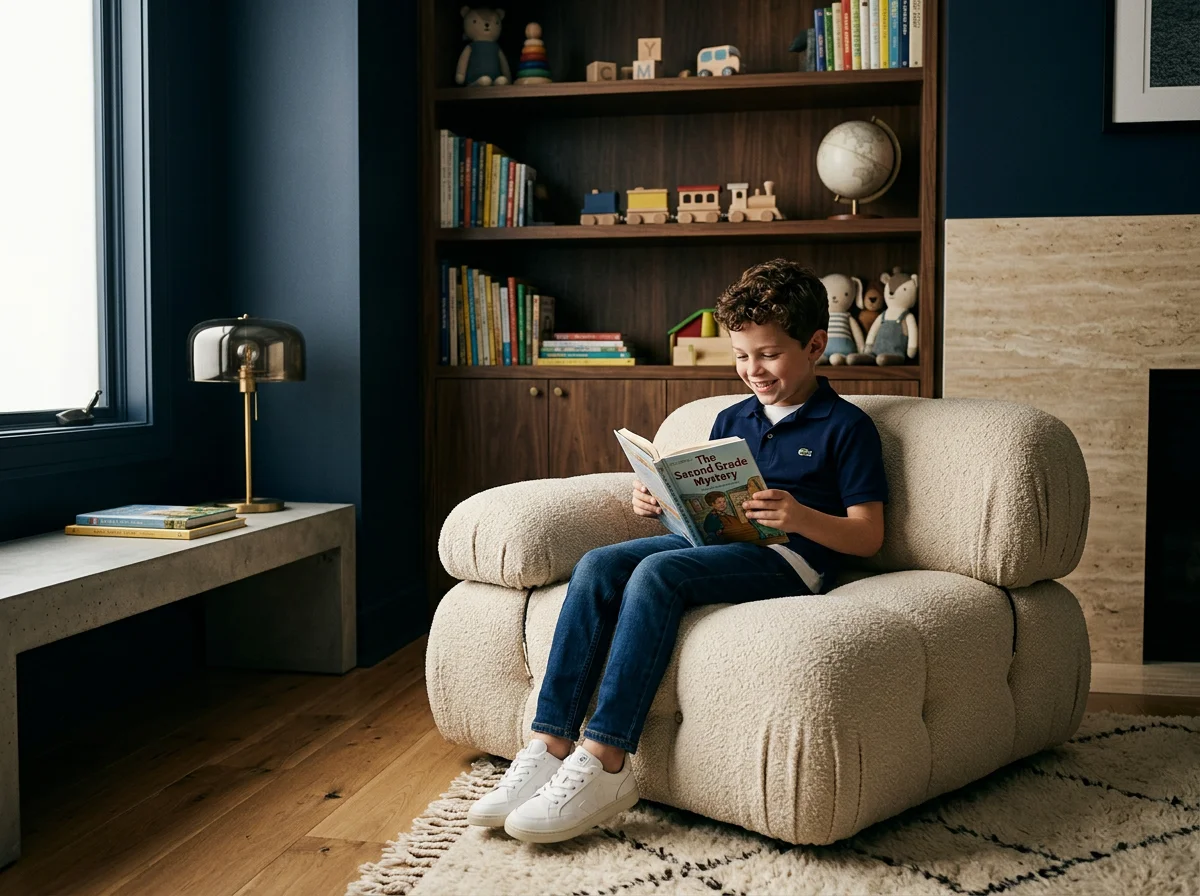
So I get it when students tell me they hate reading.
Which makes for great rapport.
Kids can spot a fake from across the room. And they won't work for one.
So when frustration inevitably rears its pretty head, I empathize. And figure out how to make it as interesting as possible for them.
Humor, empathy and psychology go a long way.
Together, we build confidence. Then, we pair rigorous reading instruction with a trust-based relationship, creativity, and fun.
In the end, they walk away with a new story. And reading skills beyond their dreams.

Curious about my qualifications?
I have a B.A. in Psychology, Masters in Reading, Literacy & Language Arts, and an Educational Therapy Certification
Services
Learning plans that address students’ challenges at the root, so they develop their unique style of learning and build confidence from day one.
Includes support for cognitive, emotional, and behavioral issues. This holistic approach further enhances success.

Educational Therapy
Learning plans that address students’ challenges at the root, so they develop their unique style of learning and build confidence from day one.
I also address cognitive, emotional, and behavioral issues. This holistic approach further enhances success.
Case Management
Advocacy and case management leadership that aligns all members of the support team. Helpful for IEP meetings, IEP planning, and more.
Team members include (but are not limited to) teachers, neuropsychologists, Special Education, and OTs.
Organization
Advocacy and case management leadership that aligns all members of the support team. Helpful for IEP meetings, IEP planning, and more.
Team members include (but are not limited to) teachers, neuropsychologists, Special Education, and OTs.
This secret advantage quantum leaps long-term success.
We craft organization systems that specifically address executive dysfunction. Projects include at-home study areas, backpack strategies, custom project management toolkits, and more.
This secret advantage quantum leaps long-term success.
We craft organization systems that specifically address executive dysfunction. Projects include at-home study areas, backpack strategies, custom project management toolkits, and more.
One Heart Listening to Another's
Your Questions, Answered
-
A tutor helps your child with a subject. I help your child with how they learn.
Here's what it looks like in practice.A tutor works on the homework in front of them. They re-teach Tuesday's lesson, walk through the worksheet, get the assignment done. When the session ends, the work ends.
I work on what's underneath the homework. Why is reading hard for this specific kid? What's their brain doing well that we can build on? What story have they been telling themselves about being a "bad reader" — and how do I help them rewrite it?
My sessions are structured around your child's learning profile, not Tuesday's worksheet.To do that work, I went to graduate school for two more years after my master's in reading. Educational therapy is its own field. We're trained to assess learning differences like dyslexia, dyscalculia, dysgraphia, ADHD, and the executive function struggles that travel with them. We build remediation plans, not study sessions. We measure progress and adjust strategy when something isn't working.
Here is our Code of Ethics.I also work with your child's whole picture, not just the hour we spend together. That means coordinating with their teachers, talking with their psychologist or pediatrician if they have one, reading their psychoeducational evaluations, and making sure the school is providing the accommodations your child is entitled to. A tutor isn't trained to do any of that. They're not supposed to be.
The other difference is the relationship. Tutoring is usually transactional: your child shows up, gets help, leaves. Educational therapy is built on trust and nurturing self-belief. Kids who struggle in school have often spent years feeling like “the kid who can't.”
If your child needs help finishing their math homework, hire a tutor.
If your child is struggling in ways that homework help won't fix or if you've been told they have a learning difference and you don't know what to do next, schedule a call to talk through your concerns with me. -
Sometimes it's obvious. They can't sound out words their classmates are reading. They cry at homework. They tell you they hate school.
Sometimes it isn't. They're bright, they're verbal, they're doing fine on paper. But something is off, and you can feel it.
Here's what I'd watch for.
In younger kids (PK through 2nd grade):
They can't remember letter sounds, even after a lot of practice. Rhyming is hard. They mix up letters that look similar — b and d, p and q — past the age where that's typical. They guess at words based on the first letter or the picture instead of decoding. They avoid books at home. They get frustrated faster than their siblings did at the same age.
In older kids (3rd through 8th grade):
They read, but slowly, and they don't want to read out loud. They can sound out a word and still not know what they just read. They skip the small words — "of," "the," "was" — and don't notice. Their spelling doesn't match their intelligence. They take forever on homework that should take twenty minutes. They've started saying things like "I'm just dumb" or "I'm not a reader."
At any age:
They were excited about school in kindergarten and aren't anymore. They get stomachaches on Sunday nights. They're exhausted in a way that doesn't match their day. Reading instructions, word problems, and tests is harder than the actual subject — they understand the science, but the worksheet wears them out.
A lot of these signs get explained away. He's just not a reader. She's a perfectionist. He'll grow into it. She's lazy when she wants to be. Sometimes those explanations are right. Often they're not, and a child who's actually struggling with dyslexia or a related reading difference spends years being told the problem is their effort.
If something has been nagging at you, trust that. Parents are usually right before the school is.
The next step isn't a diagnosis. It's a conversation. I do a free consultation where you tell me what you're seeing and I tell you what I think it might be, what kind of evaluation could give you answers, and whether educational therapy is the right fit for your child. If it's not, I'll tell you that too.
-
Dyslexia is a difference in how the brain processes written language.
Students have trouble connecting the sounds of language to the letters that represent them. That’s a significant challenge when almost everything in school depends on quick, accurate reading:
the math word problem,
the science worksheet,
the history textbook,
the test instructions.
When decoding takes significant effort, every other subject takes more effort too.
No wonder they’re e exhausted by 3pm.
Kids with dyslexia can absolutely learn to read well, write well, and thrive in school. The brain is more flexible than we used to think. With the right kind of instruction, the pathways get built. It just has to be the fit their way of learning.
That's the part I do.
I use “structured literacy.” Explicit, sequential, multisensory instruction grounded in how the dyslexic brain actually learns. We work on:
phonological awareness (the sound system of language),
decoding (turning letters into sounds into words),
fluency (reading smoothly enough to think about what you're reading), and
comprehension.
Each step builds on the one before it, and we don't move on until the foundation is solid.
By the time most kids land in my office, they've been struggling for a while. They've been corrected in front of classmates. They've watched their friends read books they can't.
So before we touch decoding drills, we work on what your child believes about their brain. We talk about how dyslexia works. We name what they're good at. We make reading sessions a place where it's safe to get something wrong.
The kid who believes they can learn is the kid who actually does.
Two more things parents usually want to know:
Do I diagnose dyslexia? No. A psychologist or neuropsychologist does that through a formal evaluation. If you don't have a diagnosis yet, and you think your child might have dyslexia, that's the first call to make. I can give you names of evaluators I trust.
How long does it take to develop the skills? It depends on your child (their age, where they're starting, what kind of support they're getting at school, and how often we work together.) Most of my families work with me for at least a school year, often longer.
Real reading change is slow at first and then it speeds up. I'll be honest with you about what I'm seeing as we go.
If your child has been diagnosed with dyslexia, or you think they might be, we can talk. The free consultation is a place to bring whatever you have — an evaluation, a teacher's note, a gut feeling — and figure out what makes sense as a next step.
-
Three reasons:
1) Passion for Psychology
I majored in psychology, and working in a girls’ group home after college set me on the path to helping young people. I continually strengthen those skills to support confidence-building and personal growth with my students.
2) Humor
As a stand-up comic, I can play with humor easily. It’s a magic want when it comes to connection with kids. It Laughter rapidly lowers stress hormones, breaks down authoritarian barriers, and builds trust.There are even more perks according to science:
Boosts children’s cognitive flexibility,
resilience, and
problem-solving skills.
3) I’m a writer
I can talk to the story behind the story, which helps students find more pathways into reading.